
By Patience Mutasa
Gweru-The most valuable certificate a young person can graduate with is not an academic qualification only, but it is the confidence to create opportunities where none seem to exist. Nevertheless, an important question confronts us as a nation: Are we teaching our young people to gain academic qualifications and merely to hustle for survival, or are we equipping them with the knowledge, skills, and mindset to build sustainable livelihoods and transform their communities?
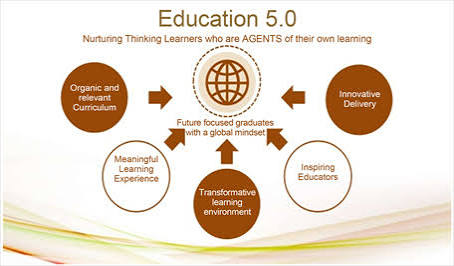
This question lies at the heart of Zimbabwe’s Education 5.0 philosophy. Education should no longer produce graduates who only seek employment. It should develop innovators, entrepreneurs, researchers, and leaders who create opportunities for themselves and others.
For many years, success was measured by obtaining a certificate and securing a formal job. While education remains essential, today’s economic realities require much more. The classroom should no longer be a waiting room for employment. It should be a workshop where future employers, innovators, and community leaders are built.
Education 5.0 challenges schools and colleges to rethink what learning should achieve and become centers for innovation. Its five pillars are teaching, research, community service, innovation, and industrialisation, encouraging schools and tertiary institutions to become centres of practical solutions rather than places where knowledge is simply memorised for examinations.
Imagine a secondary school where agricultural lessons lead to thriving school gardens that supply vegetables to local markets. Imagine business studies learners develop real business plans and manage school enterprises. Picture engineering students designing affordable irrigation systems for nearby farmers or information technology students creating digital platforms that connect producers with customers. These examples demonstrate education in action where learning becomes meaningful when students create solutions that improve their communities.
Entrepreneurship education is not merely about teaching learners how to register a company or write a business proposal. It is about developing an entrepreneurial mindset. Such a mindset encourages curiosity, creativity, initiative, resilience, ethical leadership, financial responsibility, teamwork, and the confidence to identify opportunities where others see difficulties.
Zimbabwe has always been a nation of resilient people. During challenging economic periods, families have survived through innovation and determination. However, resilience should not only help us survive crises; it should enable us to build stronger futures.
Our schools therefore have an important responsibility. Teachers should create learning environments that encourage learners to ask questions, experiment with ideas, solve community problems, and reflect on real-life experiences. Lessons should connect classroom knowledge with everyday challenges.
For example, a mathematics lesson can teach budgeting and profit calculation. Science can inspire innovations in agriculture, health, and environmental conservation. Geography can help learners understand sustainable use of natural resources. English and indigenous languages can strengthen communication, marketing, and persuasive writing skills essential for entrepreneurship.
Educational psychology reminds us that learners perform best when they find learning meaningful. When students understand how classroom knowledge improves their lives and communities, motivation increases. They become active participants rather than passive recipients of information.
Lecturers in colleges and universities also have a critical role. What if every college and university produced just five successful entrepreneurs each year? How many jobs could we create within a decade?
Research should not remain on library shelves. It should address practical challenges facing Zimbabwean communities. Whether researching climate-smart agriculture, youth unemployment, mental health, digital entrepreneurship, or inclusive education, scholars should ask one fundamental question: How will this research improve people’s lives?
Community service, another pillar of Education 5.0, deserves greater attention. Students should graduate having worked alongside communities to identify problems, design interventions, and evaluate solutions. Through community engagement, education becomes a partnership rather than an isolated academic exercise.
Parents also influence whether entrepreneurship flourishes. Traditionally, many families have associated success only with formal employment. While formal employment remains valuable, today’s economy demands flexibility and innovation. Therefore, parents should stop asking children, ‘What job will you look for after school?’ and encourage children to develop practical skills, appreciate honest work, and understand that entrepreneurship is a respectable career pathway.
Communities likewise have responsibilities. Local businesses can mentor young entrepreneurs. Successful professionals can volunteer their expertise. Financial institutions can provide youth-friendly products. Faith-based organisations, civic groups, and local authorities can create supportive environments for innovation and enterprise development.
Importantly, entrepreneurship must always be guided by ethics. Success built on dishonesty, exploitation, or corruption ultimately weakens society. Education should therefore nurture integrity, accountability, empathy, environmental responsibility, and respect for others alongside business skills.
Digital technology presents exciting opportunities for Zimbabwean youth. Through online platforms, young entrepreneurs can market products, access training, connect with customers, and participate in regional and international markets. Digital literacy has become an essential entrepreneurial skill.
However, technology alone cannot replace critical thinking, creativity, emotional intelligence, or strong values. The most successful entrepreneurs combine technical competence with resilience, adaptability, effective communication, and lifelong learning.
Resilience is perhaps one of the most valuable lessons education can offer. Every entrepreneur experiences setbacks. Businesses sometimes fail. Crops may be affected by drought. Markets fluctuate. Plans change. What distinguishes successful individuals is not the absence of failure but the determination to learn, adapt, and continue moving forward, since failure is not the opposite of success but the classroom where success is constructed.
One practical way to strengthen entrepreneurship education is through school-based enterprises. Learners can manage poultry projects, horticulture gardens, tailoring workshops, beekeeping initiatives, recycling programmes, computer repair services, or digital media enterprises. Such experiences teach planning, teamwork, customer relations, financial management, leadership, and problem-solving far more effectively than theory alone.
Tertiary institutions should establish innovation hubs where students receive mentoring, technical support, and opportunities to transform ideas into viable businesses. Partnerships with industry can expose students to real-world challenges while creating pathways for innovation and employment.
Government also has an important role in supporting entrepreneurship through enabling policies, infrastructure development, access to finance, and investment in research and innovation. Education alone cannot solve unemployment, but quality entrepreneurship education can significantly strengthen the capacity of young people to create opportunities.
The future of Zimbabwe will not be determined only by natural resources or economic policies. It will largely depend on how effectively we develop the knowledge, creativity, resilience, and entrepreneurial spirit of our young people.
Every classroom should become a place where ideas are born. Every school should become a center of innovation. Every college should become a partner in community development. Every graduate should leave not only with academic knowledge but also with the confidence to solve problems, create employment, and improve lives. A certificate may open a door; creativity, innovation, and resilience determine how far one walks through it.
The hustle will always exist because ambition drives human progress. Yet hustle without planning can become exhausting. Hustle guided by education, innovation, research, integrity, and purpose becomes entrepreneurship. Entrepreneurship sustained by resilience becomes transformation.
Zimbabwe’s greatest asset is neither its minerals nor its fertile land. It is the talent, determination, and imagination of its people, especially its youth.
If Education 5.0 is embraced in both spirit and practice, today’s learners will become tomorrow’s innovators, employers, researchers, and community and nation builders. Every educator should ask themselves this one question before ending a lesson: “How can my learners use today’s lesson to improve their lives or solve a community problem?”
Zimbabwe’s future entrepreneurs need more than academic knowledge. They need the seven CS of entrepreneurship:
Creativity- seeing opportunities where others see problems
Critical thinking- finding practical solutions
Communication-convincing customers, investors and partners
Collaboration-working together to build stronger businesses and communities.
Confidence-believing in one’s ability to take initiative and face uncertainty
Commitment-remaining dedicated and disciplined even when progress is slow
Courage- taking calculated risks and learning from setbacks
Entrepreneurship begins in the mind before it appears in the marketplace. Learners who believe in their abilities, stay committed, think creatively, and work well with others are far more likely to turn ideas into sustainable enterprises.
Patience Mutasa is a Lecturer of Psychology of Education at Gweru Polytechnic. Writing in my own personal capacity.