

Ngoni P Jemwa
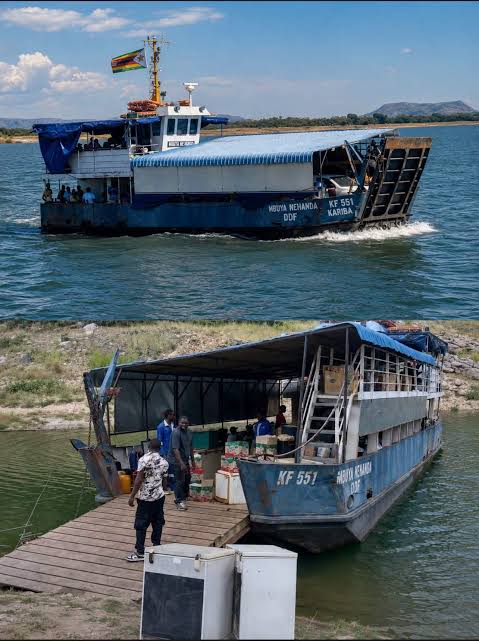
I write this piece with a heavy heart and deep sympathy for the grieving families, the survivors, and the nation at large following the tragic RIDA Ferry disaster. The loss was painful, sudden, and deeply disturbing. In moments like these, sorrow should not stand alone; it must be joined by reflection, learning, and action. As an early warning student, I feel compelled to view this tragedy not only through the lens of mourning, but also through the lens of prevention, risk governance, and the protection of human life.
The RIDA Ferry disaster is a stark reminder that early warning is not merely about forecasts, alarms, or official notices. It is about recognising danger before it becomes disaster. It is about sensing the signs, interpreting them correctly, and acting decisively. When risk is building up quietly, the surface may still look calm, but underneath there may be movement, tension, and instability. Then, in a moment, the situation can shift from manageable to catastrophic: a sudden lurch, a violent sway, a splash, and then silence broken by distress. That is why early warning must be treated as a serious operational discipline, not a mere administrative formality.

One of the strongest lessons from this tragedy is the importance of indigenous knowledge in early warning and risk avoidance.
Local communities often carry knowledge that is not written in manuals but is lived, tested, and refined over time. They know the behaviour of water, the timing of wind, the dangers of particular currents, and the patterns that signal trouble. In the case of the RIDA Ferry, there are reports that locals were aware of the dangers associated with the so-called Binga Wave, which is alleged to have contributed to the ferry’s capsizing. If that is so, then their knowledge was not ordinary opinion; it was an early warning signal that deserved careful attention.
This is where the semantics of warning matter. A warning is not a casual remark. A warning means something may happen if action is not taken. It is an invitation to pause, assess, and respond. When people with local knowledge speak up before departure, the right response is not dismissal, but verification and precaution. A responsible authority must ask: What is the hazard? How credible is the warning? What is the probability of harm? What is the likely impact if the vessel proceeds? These are not theoretical questions. They are life-saving questions.
From a risk management perspective, the tragedy highlights weaknesses across several stages of the risk cycle: risk identification, risk analysis, risk evaluation, risk treatment, and risk monitoring. Risk identification involves recognising potential threats before they materialise. In water transport, this includes weather conditions, wave behaviour, vessel stability, passenger load, mechanical condition, visibility, and communication systems. Risk analysis then asks how likely these threats are and how severe their consequences might be. Risk evaluation compares the level of risk against acceptable safety thresholds. Risk treatment, or risk mitigation, then determines what action should be taken: delay, reroute, reduce load, inspect, or cancel altogether.
If the early warning signs were present and the local knowledge holders had already voiced concern, then the critical question becomes whether the risk was properly assessed and whether the decision to proceed respected the severity of the hazard. In safety management, there is no room for wishful thinking. A voyage that looks acceptable on paper may still be unsafe in reality. That is why the practical value of community intelligence is so important: it catches what formal systems can miss, especially when conditions are changing quickly.
Risk avoidance is equally important. Sometimes the safest decision is not to manage the risk at all, but to avoid it. If conditions on the water are dangerous, the responsible action may be to stop the journey, delay departure, or seek an alternative. Avoidance is not weakness. It is wisdom. It is the quiet discipline of saying, “Not now, not under these conditions.” In a high-risk environment, the cost of proceeding may be far greater than the inconvenience of waiting.
The tragedy also raises the duty to protect and the duty to care. These duties belong to those entrusted with the safety of the public, whether as operators, regulators, supervisors, or authorities. The duty to protect means taking reasonable measures to prevent foreseeable harm. The duty to care means acting with attentiveness, prudence, and humanity toward those whose lives depend on your decisions. Where there is uncertainty, caution must lead. Where there is warning, listening must begin. Where there is risk, protection must not be delayed.
I believe this is where the role of leadership becomes most visible. Responsible authority is not measured only by how efficiently a service is delivered, but by how safely it is delivered. A decision that saves time but risks lives is not a good decision. A vessel that departs despite credible warnings may demonstrate movement, but not necessarily judgement. Good leadership sometimes means being firm enough to stop, humble enough to listen, and wise enough to act on caution. That is the difference between routine operation and responsible governance.
This disaster also highlights the need for continuous staff training in early warning and risk management. Training must not be a one-off event or a box-ticking exercise. It should be ongoing, practical, and scenario-based. Staff involved in transport safety, operations, and supervision should regularly be trained on how to interpret warning signs, how to engage local knowledge holders, how to use weather and hazard information, how to conduct pre-departure risk checks, and how to escalate concerns without delay. They should also be trained in emergency response, communication protocols, passenger safety, and post-incident reporting.
Training should include exercises that help staff recognise the difference between routine conditions and elevated risk. For instance, they should know when water movement is unusual, when wave patterns are changing, when passenger loading is unsafe, and when environmental conditions are no longer within acceptable thresholds. These are the practical skills that turn policy into protection. Without them, early warning remains a word; with them, it becomes a shield.
There is also a strong lesson here about integrating indigenous knowledge with formal systems. The two should not compete. They should complement one another. Scientific forecasting, vessel inspection, and formal operating procedures are important, but they become stronger when they are informed by local environmental intelligence. A robust safety system listens to both the instrument and the elder, both the report and the community voice, both the map and the lived experience. When these sources of knowledge are brought together, risk can be detected earlier and handled more wisely.
As I reflect on the RIDA Ferry disaster, I am encouraged to see the role of early warning not as a blame tool, but as a learning tool. Early warning is meant to reduce loss, not to assign guilt after the fact. It is a proactive system of noticing, interpreting, communicating, and responding. If a warning was available and not acted upon, then the system failed at the point of response. That failure should become a lesson for reform, not a reason for despair.
My advice to the responsible authorities and related entities is simple but urgent: strengthen your early warning systems, formalise the use of indigenous knowledge, improve risk assessment before every departure, and invest continuously in staff training. Build a culture where warnings are respected, not brushed aside; where caution is seen as professionalism, not delay; and where the protection of life is the highest operational priority.
I write this not to condemn, but to encourage. Tragedies of this kind are painful, but they can still become powerful teachers. If we learn from them honestly, we can build safer systems, wiser institutions, and stronger communities. The RIDA Ferry disaster should remind us that prevention is always better than reaction, that local knowledge matters, and that early warning is only effective when it is heard, understood, and acted upon.
NPJ Writing in my own capacity as an individual, a student of Conflict Prevention and Early Warning Mechanisms