
Tiyani Hahlani
Centre News Hub
BIKITA- The deaths of two workers linked to the Chinese-owned Bikita Minerals Lithium Mine within 24 hours have sparked fresh concerns over workplace safety, with labour and community leaders calling for stronger protections for mine workers and greater scrutiny of safety practices across the mining sector.
The first incident occurred on the night of June 6 when Thomas Kaliveni (40), a dump truck operator employed by WGB Kinsey & Company, sustained fatal injuries in an accident at a waste dump site at Bikita Minerals mine.
Less than 24 hours later, a security guard employed by Rebnek Security, another contractor at the mine, was found dead at his workstation during routine inspections conducted by a supervisor in the early hours of June 7.
The incidents have prompted concern from labour unions and community groups, who say the deaths highlight the need for stronger occupational health and safety measures in the mining sector.
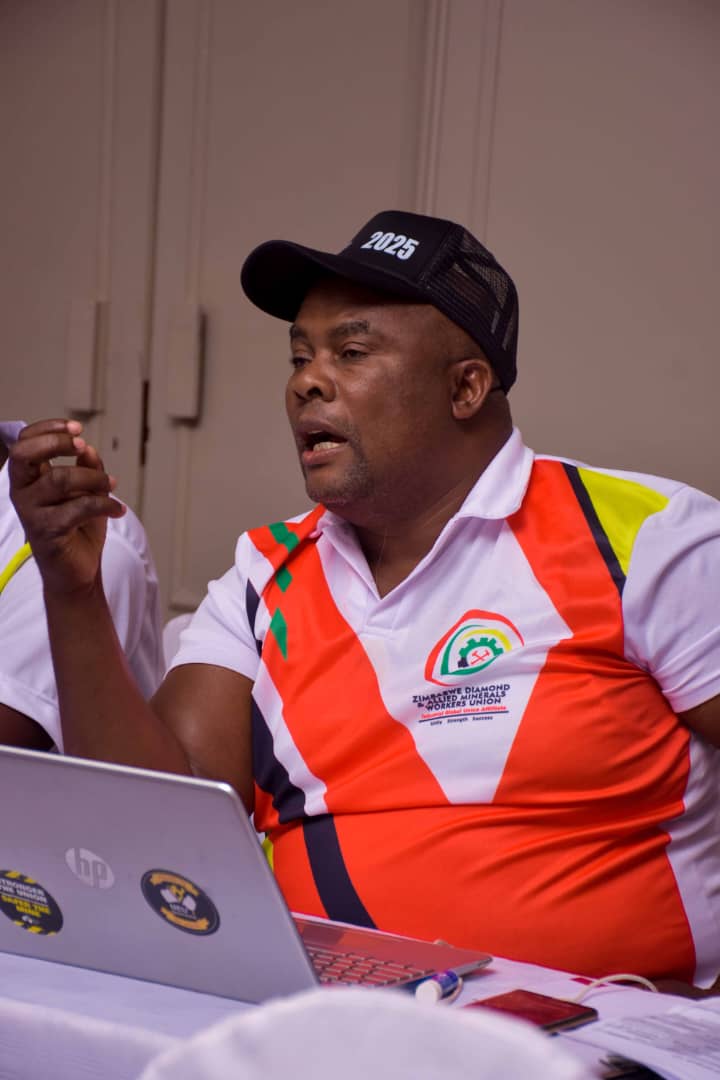
Zimbabwe Diamond and Allied Minerals Workers Union (ZDAMWU) Secretary-General Justice Chinhamo described the deaths as a tragedy for the affected families and the country’s working class.
“These are not statistics. They were breadwinners, fathers, colleagues and members of the working class whose lives mattered immensely. Their deaths are a loss not only to their families, but to the nation and to the entire working class of Zimbabwe,” said Chinhamo.
He also noted that Kaliveni’s death was the second fatal workplace accident involving a WGB Kinsey & Company employee at Bikita Minerals in less than a year, following the death of spotter Farai Murimoga Mutsvange, who was fatally struck by mining equipment at the mine in August 2025.
“This pattern of recurring fatalities at the same site involving the same contractor is not a coincidence. It is a symptom of systemic failure,” he said.
Chinhamo said workers represented by the union had repeatedly raised concerns over inadequate personal protective equipment, poor visibility infrastructure in operational areas and long working hours without adequate rest periods.
“At Bikita Minerals specifically, workers have reported that reflectors, safety markers and visibility infrastructure across operational areas are either absent or inadequate,” he said.
He further claimed that pressure to meet production targets was contributing to unsafe working conditions.
“This concern is extremely widespread, and ZDAMWU hears it directly from workers on the ground. The pressure to meet production targets creates environments where corners are cut, and workers feel unable to exercise their right to refuse unsafe work without fear of losing their jobs,” said Chinhamo.
He added that contractor employees were often more vulnerable because of limited job security and alleged that some contractors discouraged unionisation among workers.
“What makes it worse is that some contractors do not want their workers to be unionised, where education and training on safety usually happens,” he said.
Meanwhile, Bikita Institute for Land and Development (BILAD) Team leader Mountain Mujakachi said his organisation was concerned by what it described as a recurring pattern of fatal workplace incidents.
“As Bikita Institute for Land and Development, we are worried by the rate at which these accidents are happening at this company. Since 2021, we are on average losing two breadwinners per year,” said Mujakachi.
He questioned whether the company was fully adhering to the Global Reporting Initiative (GRI) Standard 403, which focuses on occupational health and safety management.
“We are still wondering if Bikita Minerals is adhering to the Global Reporting Initiative Standard 403, which speaks to occupational health and safety standards for workers,” he said.
Mujakachi also claimed that workers had raised concerns about production targets and workplace pressures, alleging that some employees felt compelled to take risks to meet performance expectations.
“We have engaged several workers who claim that one of the biggest problems is working for targets. Some say they end up taking risks so that they can meet those targets,” he said.
Bikita Minerals expressed sorrow over the deaths and said investigations into both incidents were underway.
“The safety, health, and wellbeing of everyone working at our operations remain a core priority,” the company said in a statement.
Both Chinhamo and Mujakachi called for stronger enforcement of occupational health and safety regulations, increased workplace inspections and greater accountability in contractor management.
ZDAMWU urged mining companies to conduct independent safety audits, strengthen safety compliance and ensure that workers can participate freely in trade unions and workplace safety programmes.
As investigations into the two deaths continue, labour and community leaders say the incidents should serve as a reminder that protecting workers must remain a priority across Zimbabwe’s mining industry.