
By Tiyani Hahlani
Centre News Hub
ZAKA – As international donor funding for HIV and AIDS programmes continues to decline, Zimbabwe’s AIDS Levy has become an increasingly important lifeline, enabling the country to sustain critical HIV services and reach vulnerable groups that have long received limited attention.
Among those benefiting are adolescent boys and young men in Zaka District, where the National AIDS Council (NAC), through its social contracting model, is supporting the Brother2Brother (B2B) programme to close longstanding gaps in HIV prevention, life skills development and economic empowerment.
For years, HIV interventions largely focused on women and girls because of their heightened vulnerability to infection.
While those programmes achieved significant progress, they also left many boys with limited access to HIV information, mentorship and support.
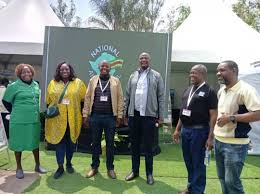
Speaking with NAC Masvingo Provincial Manager Takudzwa Kombora said the organisation introduced the Brother2Brother programme after recognising this disparity.
“We observed an information gap between boys and girls. Over time, donor programmes targeted girls and, incidentally, boys were left out. This created a possible avenue for gender-based violence, and the Brother2Brother programme covers that gap,” he said.
Targeting boys and young men aged 10 to 24, the programme combines HIV education, peer mentorship, sports, sexual and reproductive health education and entrepreneurship to address the social and economic factors that increase vulnerability to HIV.
Kombora said empowering boys requires more than simply raising awareness.
“We provide a holistic package to boys to ensure they are empowered in various ways, including awareness, information and sport, which addresses idleness. Through peer-to-peer information sharing and economic strengthening, the boys become empowered, reducing their vulnerability and ensuring they become responsible men,” he said.
Beyond HIV prevention, participants receive entrepreneurship training and practical livelihood skills that improve their economic prospects while reducing behaviours associated with HIV risk.
According to Kombora, the programme is already producing positive results.
“Boys have been empowered in various ways. They now access health and HIV services freely and have also been equipped with entrepreneurship skills,” he said.
The success of the programme, he said, has been made possible by Zimbabwe’s domestic financing mechanism at a time when external funding has become increasingly uncertain.
“The AIDS Levy has ensured continuity of services, averting possible disruptions despite donor funding cuts. Although we cannot completely cover the gap, we have ensured that through the AIDS Levy we have something to fall back on,” he said.
Kombora described the AIDS Levy as the country’s most dependable source of funding for community-based HIV interventions.
“Domestic funding has filled the gap left by donor flight. It is the most stable and reliable funding left,” he said.
He said the Brother2Brother model demonstrates how locally financed programmes can address HIV while tackling broader challenges affecting young men, including unemployment, harmful social norms and social vulnerability.
“The Brother2Brother model assists us in this regard. It covers information sharing, awareness and economic empowerment,” he said.
As Zimbabwe adapts to a changing global funding landscape, the AIDS Levy is proving to be more than a source of financing.
It is sustaining community-driven HIV programmes while ensuring that adolescent boys and young men, once largely overlooked in the national HIV response, have access to the knowledge, opportunities and support needed to make informed decisions and build healthier futures.