
Center News Hub
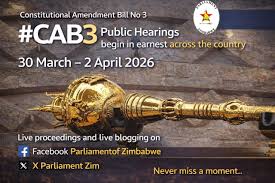
Masvingo-Citizens in Action Southern Africa (CIASA) has raised concern over increasing public resentment to the Constitutional Amendment (No. 3) Bill, as communities across Zimbabwe participate in scheduled public hearings running from March 30 to April 2.
According to CIASA, consultations conducted in Masvingo Urban and surrounding districts including Gutu, Bikita, and Chivi reveal growing dissatisfaction among citizens, who are questioning both the substance of the proposed amendments and the inclusivity of the consultation process.
Community members have cited limited access to public hearings as a major barrier to participation.
With only a few designated venues, fixed session times, and a short consultation window, many particularly those in rural areas, face significant challenges in attending.
Transport costs, long travel distances, and time constraints have been identified as key obstacles, disproportionately affecting marginalized groups such as women and girls.
Beyond concerns over access, citizens have also expressed unease about specific provisions within the Bill.
These include proposals related to extending terms of office, altering the election process for the President, and increasing executive influence over key state institutions. Many fear that such changes could weaken democratic accountability, reduce citizen participation, and erode public trust in governance systems.
In a statement dated March 30, CIASA notes that voices from affected communities have underscored the need for a more inclusive process.
“Some citizens argue that the current consultation framework is insufficient for a matter of such national importance, warning that limited engagement risks excluding critical perspectives and undermining the legitimacy of the outcome,” reads the statement.
CIASA has also noted concerns regarding the shrinking civic space surrounding discussions of the Bill.
Reports of arrests and harassment of activists, opposition figures, and human rights defenders have raised alarm, with calls for authorities to ensure that citizens can freely express their views without fear of intimidation.
“The organization is further concerned about potential risks associated with provisions that may increase executive control over the judiciary, electoral processes, and independent commissions.
“Weakening such institutions could have far-reaching implications for accountability, human rights protection, and gender equality,” continued the statement.
CIASA cautioned that any reforms diminishing these mechanisms could reverse progress made in advancing gender equality.
In response, CIASA has called on the government and Parliament to expand public hearings to ensure broader participation, especially in rural and marginalized communities.
“The organization also urged stakeholders to reconsider provisions that may concentrate power or undermine institutional independence, and to uphold citizens’ rights to freely participate in democratic processes,” also reads the statement.
CIASA emphasized that constitutional reform must be grounded in inclusive, transparent, and meaningful public participation, reaffirming its commitment to promoting accountable governance and the protection of rights across Zimbabwe and the Southern African region.