
Tiyani Hahlani
Centre News Hub
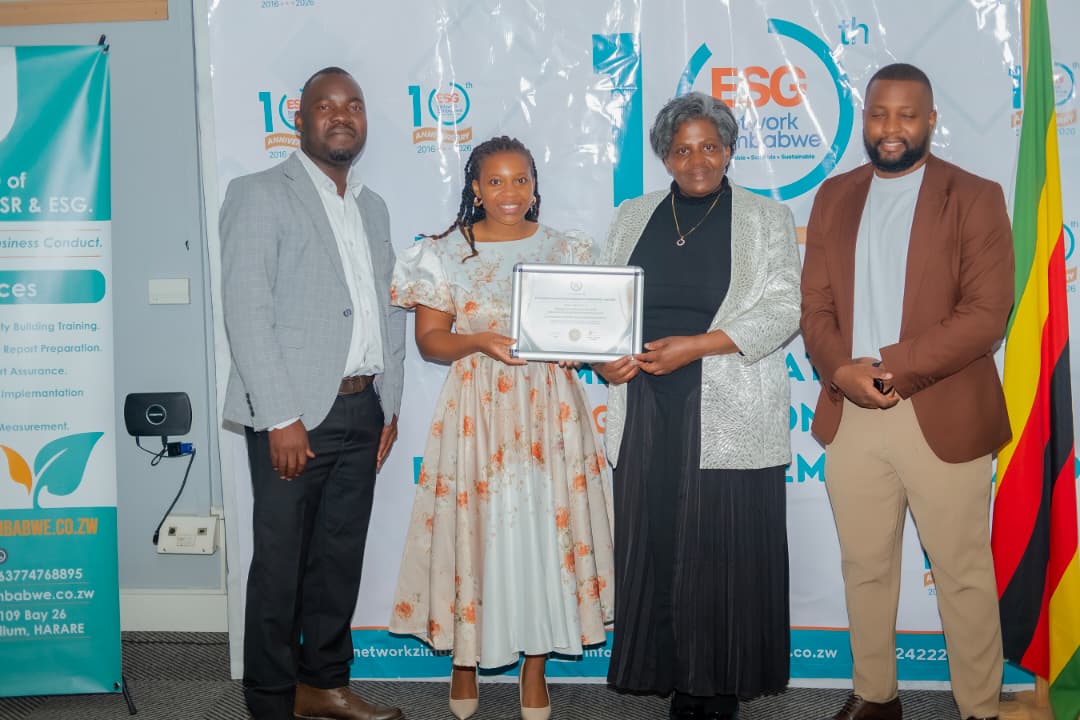
MUTARE — The Southern Alliance for Indigenous Resources (SAFIRE) has been honoured with the Environmental Stewardship & Social Impact Award at the 2026 Manicaland Province CSR, ESG & Responsible Business Awards.
The award recognises more than three decades of SAFIRE’s work with rural communities to protect natural resources while creating sustainable livelihoods.
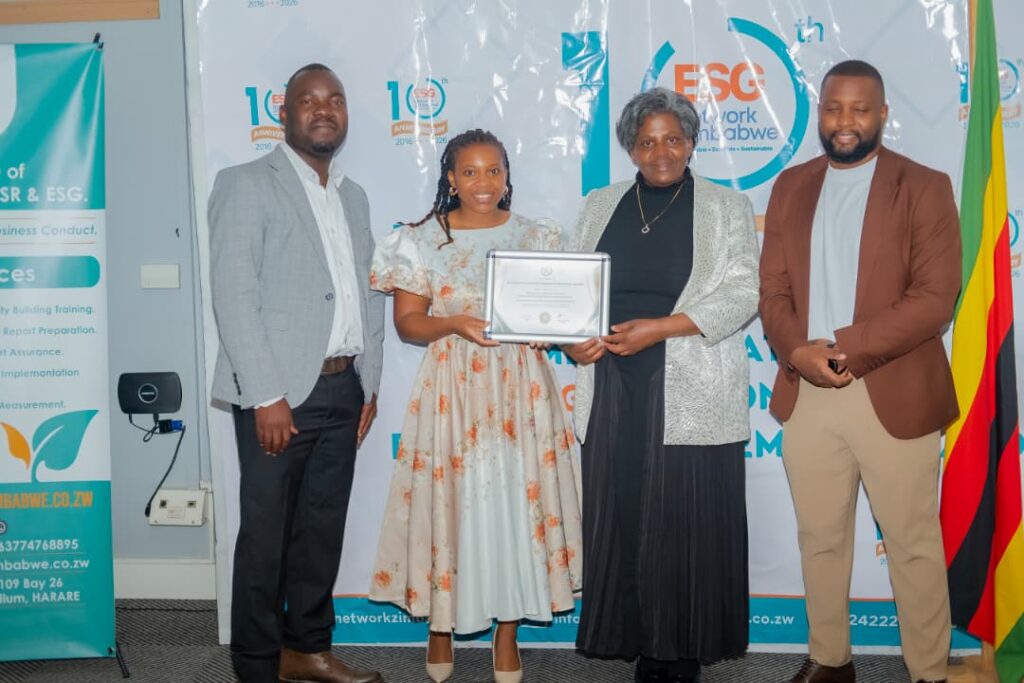
The organisation received the accolade at a gala dinner held at the Golden Peacock Hotel in Mutare, hosted by the Environmental Social and Governance Network Zimbabwe (ESGNZ) on the sidelines of the 10th Annual Zimbabwe ESG and Responsible Business Summit.
The awards were held under the theme, “Driving Devolution, Empowering Communities towards Vision 2030: Celebrating Sustainability Excellence in Manicaland.”
SAFIRE, which was founded in 1994 at Tongogara Refugee Camp, currently operates in Manicaland, Masvingo and Matabeleland South provinces.
Over the past decades, its livelihoods programmes have reached more than 33,000 households and increased average monthly household income by US$165 through nature-based enterprises.
The organisation has also planted close to 600 000 trees, regenerated 50 000 hectares of degraded land and protected 5 600 hectares of vital farming land.
Its natural resource governance model, pioneered at district level two decades ago, has since been adopted by all 60 rural district councils in Zimbabwe.
SAFIRE director Estella Toperesu said the award was a major milestone for the organisation and the communities it has worked with over the years.
“This recognition is a proud milestone for SAFIRE and for the communities we have had the privilege to work alongside over the past three decades,” said Toperesu.
She said the award reaffirmed the organisation’s belief that conservation works best when communities are empowered to restore, manage and benefit sustainably from their natural resources.
The impact behind the award is reflected in the experiences of communities that have turned environmental conservation into a source of income.
In Mutasa District, farmer Tawanda Bukuta provides one example.
Bukuta previously earned about US$100 a month from rain-fed maize grown on degraded land.
After joining SAFIRE’s forest restoration programme three years ago, he established a nursery producing export-quality peach seedlings.
He now earns roughly US$1,500 a month and has helped 60 other farmers establish their own orchard and nursery group.
“I have learned the importance of protecting and nurturing our forests as there is life in these ecosystems,” said Bukuta.
The recognition comes at a significant time for community-based conservation in Zimbabwe, following the passage of the Parks and Wildlife Amendment Act Number 4 of 2025.
The legislation formally recognises community environmental rights and provides a stronger legal foundation for communities to participate in the management and benefits of natural resources.
For SAFIRE, the award therefore represents more than recognition for an organisation.
It is an endorsement of a community-led approach that has sought to make conservation economically meaningful for rural households while protecting the natural resources on which they depend.