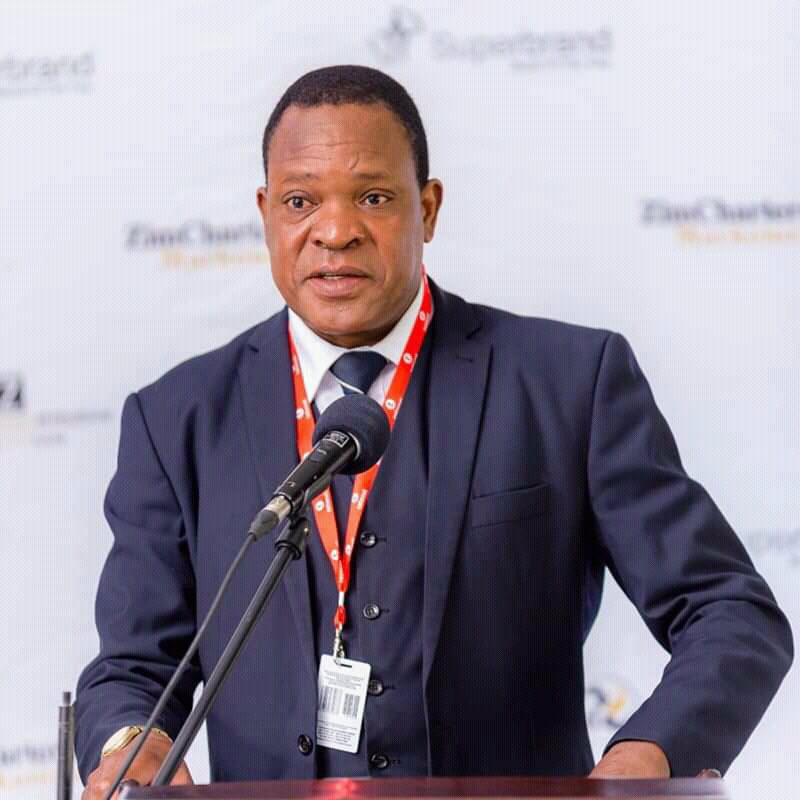


Mhandamabwe Fuel Station Ignites Rural Economic Shift In Chivi North
Tiyani Hahlani
Centre News hub
Mhandamabwe—What was once a quiet stopover in the rural arid district of Chivi North is steadily transforming into a growing center of economic activity, following the commissioning of a modern fuel service station that is reshaping local commerce and mobility patterns.
The new facility is being positioned as more than a refueling point.

For government and business leaders, it represents a deliberate push to decentralise economic activity and unlock the potential of rural growth points under Zimbabwe’s devolution agenda.
Director of Economic Affairs in the office of the Minister of State for Masvingo Provincial Affairs and Devolution, Clever Chingwara, who officiated the launch on behalf of Minister Ezra Chadzamira, said Mhandamabwe Business Center is fast evolving into a strategic economic hub capable of anchoring development in the province.
“Mhandamabwe is no longer just a stopover. It is a rapidly evolving economic hub with investments that are critical in the advancement of rural industrialization and Vision 2030 targets,” he said.
The development also aligns with government efforts to strengthen infrastructure in underserved areas, including the rehabilitation of the Shurugwi–Mhandamabwe road, which authorities say is improving access, trade flows, and investor confidence.
Deputy Minister of Energy and Power Development, Yeukai Simbanegavi, applauded the success of the project as it reflects a broader national drive to expand energy access while deepening rural participation in economic activity.
“This is not just infrastructure, we are restoring dignity and opportunity as the Rural communities must not be left behind, but positioned as centers of growth, investment, and innovation, ensuring a reliable access to fuel, while supporting agriculture, transport, and also local commerce,” she said.
She also emphasized the government’s agenda to redefine rural areas as viable centers of commerce rather than marginal economies.
“As a nation where every community, rural or urban, has access to opportunity and can actively participate in economic growth through the expanded fuel availability and also increased LPG adaptation and solar integration.
“Solarisation also remains a key priority for us as we accelerate the transition towards cleaner and sustainable energy solutions,” said Simbanegavi.
For Puma Energy Zimbabwe, the Mhandamabwe investment is part of a wider strategy to reimagine rural fuel stations as integrated service hubs rather than standalone retail points.
Moreover, the Puma Company General Manager, Patrick Ngugi, emphasized the importance of the station in support of the everyday rural life beyond fuel supply.
“This is more than a retail station it is a community hub as it supports access to energy, financial services, and essential goods for households, farmers, and small businesses.”
“This infrastructure has come as a good community benefit for the people of Mhandamabwe as there is now creation of jobs amongst 40 youths with seven of them gaining permanent jobs, and also some improved opportunities for informal traders, transport operators, and local suppliers,” says Ngugi.
Head of Africa, Ben Ouattara, said that Zimbabwe is increasingly central to its African growth strategy as the investment signals confidence in the country’s long-term economic direction.
“Zimbabwe is not just another market; it is a strategic anchor in our continental vision, “says Ouattara.
Operating in more than 16 African countries, the company is expanding rural infrastructure investments while exploring cleaner energy solutions, including solar power integration, as Mhandamabwe station is fully solarised, a move aimed at ensuring energy reliability while reducing dependence on the national grid.
Ouattara also said that such developments extend beyond fuel supply, strengthening trade, mobility, and regional economic integration.
“Energy is more than supply; it is stability, growth, and dignity,” he said.
Located along a key transport corridor linking Masvingo, Bulawayo, and Beitbridge, the station is expected to support agriculture, mining, and logistics operations in the region.
For local residents, the impact is immediate and practical, shorter travel distances for fuel, improved access to services, and emerging business opportunities closer to home.