
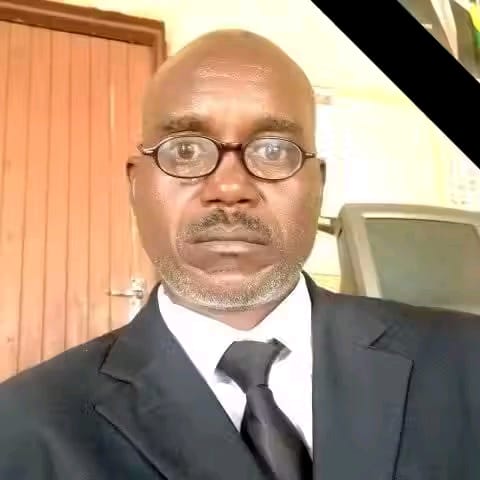
By Tabe Ishimael Danirayi.
This document provides a detailed analysis of the evolution of inclusive education in Zimbabwe, framing it as a profound socio-political journey. This journey traces a path from a colonial system built on segregation to a contemporary, rights-based framework designed to honor learner diversity. The analysis is structured around three core themes: the historical and philosophical shift underpinning this evolution, the current policy and legislative framework that provides its foundation, and the persistent tensions and challenges that complicate its full realization.
1. Historical Context: From Segregation to a Rights-Based Paradigm
The foundation of Zimbabwe’s modern education system was laid during the colonial era, a period characterized by deep-seated segregation. The educational landscape was bifurcated not only along racial lines but also based on perceived ability. This system mirrored the prevailing global approach to disability: the medical model. In this paradigm, disability was viewed as an individual deficit, a pathology inherent to the person that needed to be cured, managed, or contained, often in isolated, specialized institutions. This approach inherently excluded learners with disabilities from mainstream educational settings and reinforced social stigma.
The attainment of independence in 1980 marked a critical turning point. The post-independence government, driven by a philosophy of national unity and equity, began the arduous task of dismantling these segregated structures. A significant milestone was the Education Act of 1987, which signaled the beginning of a deliberate, albeit slow, transition away from the medical model. This transition was towards more progressive frameworks: the social model and the human rights model of disability.
The social model posits that people are not disabled by their impairments but by the barriers—attitudinal, physical, systemic, and communicational—present in society. The human rights model builds upon this, asserting that disability is not a medical condition to be managed but a facet of human diversity. It frames the exclusion and marginalization of persons with disabilities as a violation of fundamental human rights, placing the onus on the state and society to dismantle barriers and ensure full and equal participation. This philosophical shift was fundamental, redefining the problem of exclusion as a societal failure rather than an individual deficiency.
In this contemporary understanding, inclusive education in Zimbabwe is defined as a dynamic process. It is not merely about placing a child with a disability in a mainstream classroom; it is a continuous process of addressing and responding to the diverse needs of all learners. It seeks to increase participation in learning, cultures, and communities while simultaneously reducing exclusion from the educational system. This evolution is framed not as an abstract academic exercise but as a critical component of national development. With an estimated 600,000 children in Zimbabwe living with some form of disability, they represent one of the most socially neglected and vulnerable cohorts in the country. The realization of inclusive education is thus cast as an “enabling right” —a fundamental entitlement that unlocks access to employment, healthcare, social dignity, and full citizenship, fostering a society where diversity is celebrated as an essential component of human experience.
2. The Policy and Legislative Framework: The New Constitutional and Legal Architecture
The document outlines a robust and evolving legislative framework designed to operationalize these philosophical shifts. The centerpiece of this new architecture is the 2013 Constitution of Zimbabwe, which fundamentally transformed the legal status of education from a social service to an enforceable human right.
Two constitutional provisions are particularly crucial. Section 75 mandates that every citizen and permanent resident has the right to a basic, state-funded education. It also guarantees the right to further education, which the state must make progressively available and accessible through reasonable legislative measures. This provision establishes education as a justiciable right, meaning it can be legally enforced in courts. Section 83 goes further by explicitly outlining the rights of persons with disabilities. It obliges the state and all government agencies to recognize these rights and, critically, to provide specialized facilities for the education and training of persons with disabilities. This constitutional mandate provides the necessary legal weight to challenge discriminatory practices and serves as the foundational bedrock for all subsequent policy interventions.
Building on this constitutional foundation, the Education Amendment Act of 2020 represents a pivotal modernization of the national educational framework. This Act explicitly aligns the education sector with the principles of Education 5.0, a paradigm that emphasizes the integration of teaching, research, innovation, community service, and industrialization as interconnected pillars of national development. Within this context, the Act mandates the establishment of inclusive education practices that cater to diverse learning needs, ensuring that marginalized groups, including children with disabilities, have equitable access to quality education.
Key provisions of the 2020 Amendment Act include:
· Prohibition of Exclusion: It explicitly prohibits any school from refusing admission to a child on the grounds of disability. This provision criminalizes a longstanding barrier that had historically excluded countless children from education.
· Redefining Support: By defining “special needs education” as “specially designed instructional arrangements,” the Act recognizes that true inclusivity requires more than just physical presence in a classroom. It mandates the proactive adaptation of the educational environment, including curriculum, teaching methods, and assessment, to the learner’s needs. This moves the focus from “fixing” the child to “fixing” the system.
The final pillar of the legislative framework is the National Disability Policy (NDP) of 2021. Launched by the Presidency, this policy serves as the overarching strategic framework for domesticating the United Nations Convention on the Rights of Persons with Disabilities (UNCRPD), which Zimbabwe ratified in 2013. The NDP is a comprehensive document that sets rigorous standards for inclusion across all sectors, advocating for the mainstreaming of disability issues—meaning disability considerations must be integrated into all government programs, policies, and budgets, rather than treated as a separate or isolated issue.
3. Persistent Tensions and Structural Challenges
Despite these significant advancements, the document identifies a critical and persistent tension between the new, progressive legal instruments and the older, outdated ones that remain in force. The most prominent example is the tension between the new constitutional and policy framework and the Disabled Persons Act (DPA) of 1992.
The DPA is characterized as being rooted in a “charity-based” approach to disability. This approach views persons with disabilities as objects of pity and benevolence rather than rights-holders. The document highlights several critical shortcomings of the DPA:
· Silence on Rights: It is notably silent on the specific educational, linguistic, and cultural rights of persons with disabilities. For example, it does not enshrine the right to use and be educated in Zimbabwean Sign Language for the Deaf community—a right now recognized as fundamental by the Constitution and the UNCRPD.
· Outdated Protections: The DPA historically contained provisions that protected the government from litigation regarding the accessibility of its facilities and services. This “immunity clause” directly contradicts the spirit and letter of the 2013 Constitution, which makes rights justiciable, and the 2020 Amendment Act, which mandates accessibility and prohibits discrimination. This legal inconsistency creates a significant implementation gap, where progressive policies exist but can be undermined by an older, contradictory law.
This tension illustrates a broader challenge: the existence of a robust policy and legislative framework does not automatically translate into effective practice. The document implies that the evolution of inclusive education in Zimbabwe is at a critical juncture. While the country has successfully built a modern, rights-based legal and philosophical foundation, it is now grappling with the more complex task of implementation. This includes:
· Reconciling Conflicting Laws: Resolving the contradictions between the 1992 DPA and the 2013 Constitution and 2020 Education Amendment Act is a necessary first step.
· Shifting Institutional Culture: Moving beyond the “charity-based” mindset embedded in older legislation and society requires massive capacity-building, teacher training, and a change in attitudes at all levels of the education system.
· Resource Allocation: The constitutional promise of “progressive availability” requires significant and sustained financial investment in infrastructure, assistive technologies, accessible learning materials, and specialized support staff.
In conclusion, the document presents a comprehensive narrative of profound transformation. Zimbabwe has undergone a structural and systematic evolution in its approach to inclusive education, moving from a colonial legacy of segregation to a contemporary framework enshrined in a progressive Constitution and aligned with global human rights standards. The legislative bedrock provided by the 2013 Constitution, the Education Amendment Act of 2020, and the National Disability Policy of 2021 demonstrates a strong political and legal will to create an education system that is truly inclusive. However, the journey is far from complete. The persistence of outdated laws like the Disabled Persons Act of 1992, coupled with the immense challenge of translating policy into practice on the ground, reveals that the nation’s current struggle lies in closing the gap between its new, aspirational legal framework and the lived reality for the estimated 600,000 children with disabilities who await the full realization of their constitutional and human rights to an inclusive, equitable, and quality education.
Tabe Ishimael Danirayi is an Education analyst and writes in his own capacity