
News Editor.
Center News Hub.
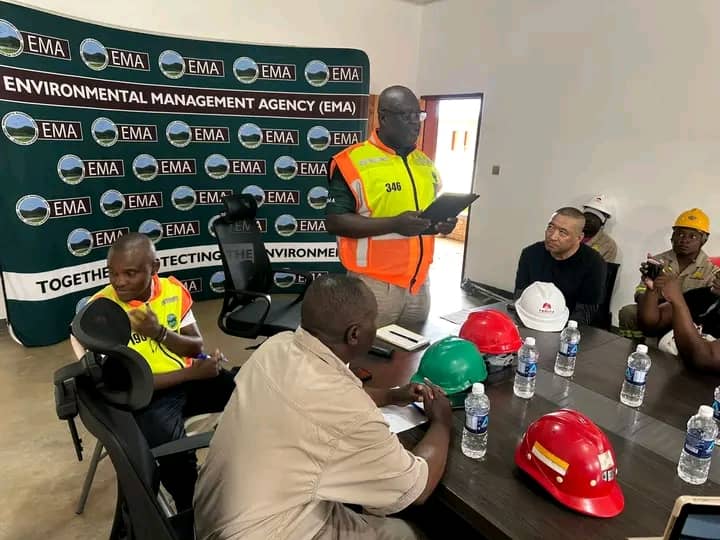
Mashava — A high-profile media briefing and tour at Empress Mine exposed how the gold mine has managed to embrace responsible mining and environmental stewardship becoming a role model for other mining entities in Masvingo and beyond to emulate.
Hosted by Empress Mine management and the Environmental Management Agency (EMA), during a recent media tour a sign of joint efforts to promote environmental education, build capacity in sustainable management, and ensure that development proceeds in harmony with the environment.
In remarks opening the briefing, Milton Muusha, the Provincial Environmental Manager for Masvingo, welcomed journalists and partners, emphasizing that mining remains a cornerstone of the nation’s socio-economic development.
Yet he warned that without proper regulation and oversight, mining can lead to land degradation, pollution, biodiversity loss, and long-term environmental harm.
“This tour is a significant part of EMA’s ongoing mission to promote environmental education, build capacity in sustainable environmental management, and ensure that all development happens in a sustainable manner,” Muusha said, laying out the agency’s focus under current and upcoming national development plans (NDS1 and NDS2).
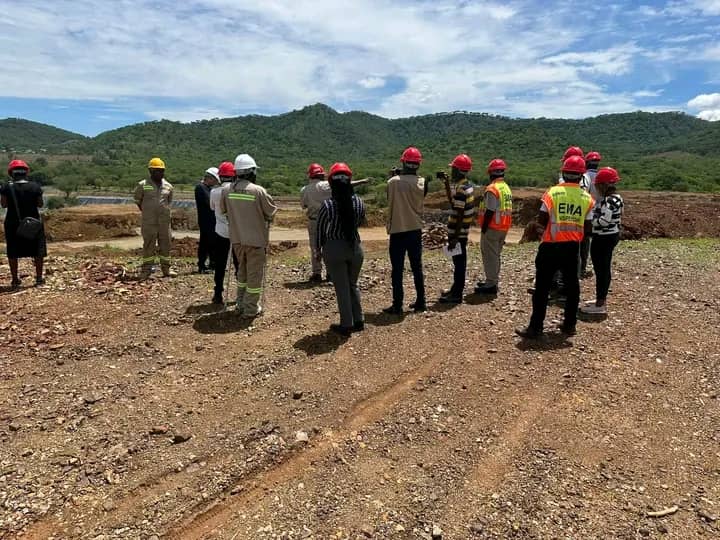
The tour provided a close look at the rehabilitation efforts underway at Empress Mine. Demonstrations included the rehabilitation of mined-out shafts, re-vegetation initiatives, and the construction of tailings storage facilities designed to minimize environmental risk.
Muusha noted that the mine spans about 160 hectares, with roughly 80 hectares already mined. Of those, 43 hectares have been rehabilitated through backfilling, and assisted re-vegetation, a requirement, of a broader commitment to restoring mined lands.
“Although assisted re-vegetation is still a requirement, we applaud the mine’s commitment to ensure all mined-out areas are rehabilitated,” he said.
Members of the fourth estate were guided to view Empress Mine as a center of excellence in environmental management within the province.
Muusha acknowledged ongoing rehabilitation in several areas but highlighted the site as a living example for other mines to learn from.
He also noted a critical, unresolved challenge: abandoned and un-rehabilitated mining sites, which demand government resources for rehabilitation and to return land to usable state for local communities as a major challenge in the province.
Beyond the physical works, the tour celebrated the socio-economic benefits the project brings to communities, Masvingo Province, and the nation—through job creation and fiscal contributions—while reaffirming a commitment to sustainable environmental management.
The EMA provincial boss urged the media and other stakeholders to identify and document areas that may not be well managed, so remedial actions can be put in place across the mining sector.
A key topic during the tour was water quality.
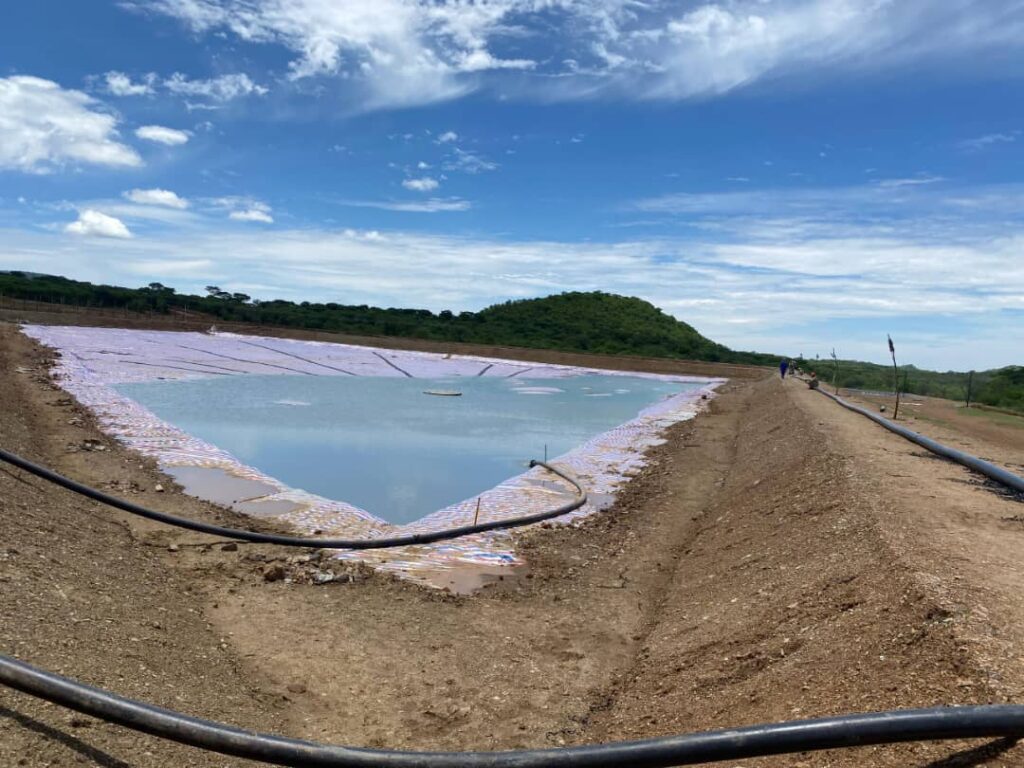
As the group moved toward the new tailings storage facility under construction, Muusha emphasized vigilance against potential contamination of surface and groundwater resources.
He presented this facility as a model of how sustainable mining can be achieved when environmental protections are integrated at every stage of operation.
Muusha called on for collective action in environmental stewardship as a shared obligation—government, industry, communities, and the media—under the motto “Together Protecting the Environment.”
He thanked the media for commitment in raising environmental awareness and encouraged continued collaboration into 2026.
Empress Mine manager, Richman Zvabvirepi, said the company is committed in balancing economic development with environmental responsibility, and a renewed sense of complying with the statutes needing attention in Zimbabwe’s mining sector.
He added that the company had begun rehabilitation of its disused pits since 2021 and the establishment of a state of the art processing plant required the mine to up its game in environmental rehabilitation.
He said the plant process around 1000 tons of gold ore a day which requires a lot of water
“From our assessments we would continue exploration of gold for the next 50 years and as we continue our mining activities we saw it fit to continue complying with government statutes to ensure we do our mining in an environment friendly manner.
“The rehabilitation process is an ongoing project and we shall continue to do so such that we do not leave environmental harm to the community flora and fauna as a result of our operations,” he said.