
Rutendo Chirume
Center News Hub
Masvingo — A sharp reality check emerged this week as communities in Masvingo Rural reported that deepening economic hardship is pushing more families to marry off their daughters at a younger age.
The concern was laid bare at a community education and awareness meeting held on April 30 in Nemamwa, Ward 10, organized by Citizens in Action Southern Africa (CIASA) in partnership with the Victim Friendly Unit (VFU).
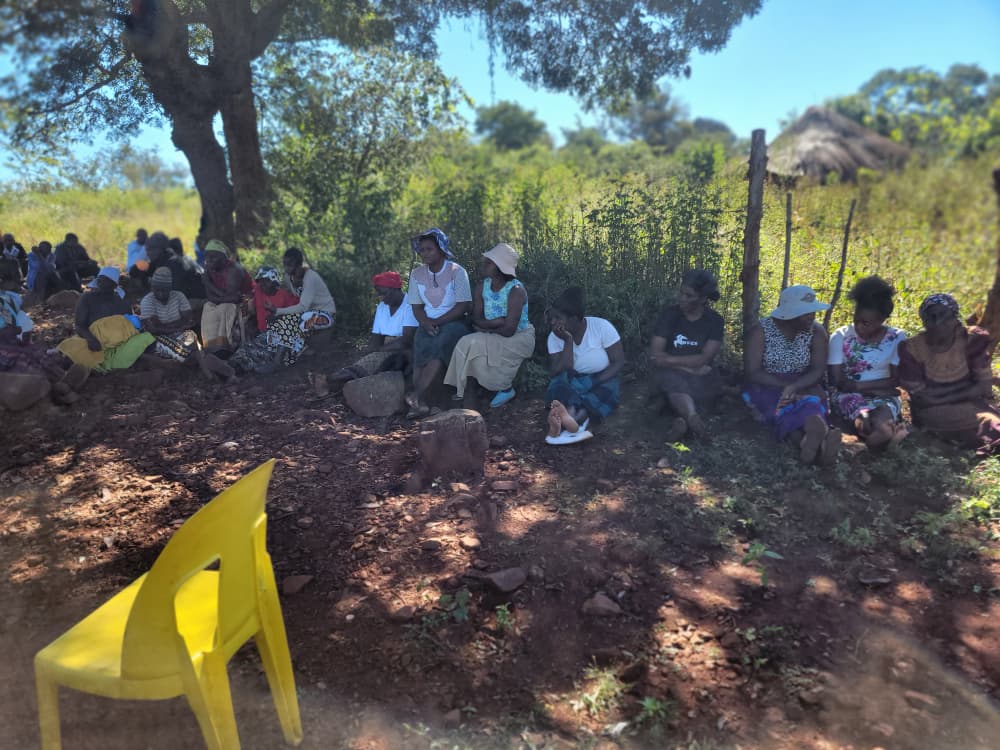
Despite sustained government efforts to curb gender-based violence (GBV) and child marriages, the gathering noted how poverty continues to be the loudest driver behind these practices in Zimbabwe’s rural areas.
Attendees voiced that in many cases, guardians perceive marriage as a survival strategy, sometimes receiving money or material support from would-be suitors or negotiators who wield economic or political influence.
A sobering body of data accompanies these lived experiences.
A May 2025 study by Women and Law in Southern Africa (WLSA) and Equality Now found that about 34% of Zimbabwean girls are married before turning 18, placing the country among Africa’s top 20 for child marriage.
The report also points to persistent implementation gaps in rural areas where access to justice remains uneven.
UNICEF’s insights further illuminate the risk landscape: girls from the poorest households are up to six times more likely to be married off than their wealthier peers, a pathway that heightens exposure to GBV, cuts education short, and elevates health risks—including a maternal mortality rate up to five times higher than that of adult women.
Community members at the Nemamwa meeting also flagged systemic barriers to justice, noting that some perpetrators enjoy financial power, political influence, or social connections that can stall investigations and erode trust in protection systems.
Fungai Mashaya, a Ward 10 resident, painted a stark picture
“These marriages are not just cultural; they are economic decisions. Poverty and the broader economic situation push families to see their daughters as a way to cope,” she said.
In some cases, she said, pregnancy becomes an opportunity to secure compensation from the perpetrator, further entrenching hardship for the girl and her family.
The VFU’s Masvingo District Coordinator, Assistant Inspector Tawanda Tongofa, acknowledged the uneven pattern of GBV and child marriage but underscored poverty as the main driver across the district.
“One month it’s high, the next it’s low,” he explained, before stressing the need for economic empowerment and education to disrupt the cycle.
He also highlighted the complicating role of wealth and influence among perpetrators, which can hinder investigations and the finalization of cases.
Tongofa praised traditional leaders for stepping up to support investigations but warned that silence from witnesses and caregivers can stall justice.
Tatenda Mandondo, CIASA’s programs officer, emphasized that legal frameworks alone are not enough.
“Ending child marriage is inseparable from addressing poverty and inequality,” Mandondo said.
He called for sustained community engagement, economic empowerment, and accountability to ensure survivors are prioritized over influence.
“Through initiatives like this, CIASA aims to equip communities with knowledge on GBV and child protection laws, strengthen confidence in reporting mechanisms, and challenge harmful social norms that normalize child marriage,” Mandondo added.
As Masvingo Province grapples with these intertwined challenges, advocates insist that lasting progress will require a coalition approach, robust economic support for vulnerable families, stronger school attendance and girls’ education initiatives, and reforms that close the gaps between law and lived reality.
With groups on the ground calling for action, Nemamwa’s message is clear: protecting girls means strengthening families, communities, and systems that safeguard their future.